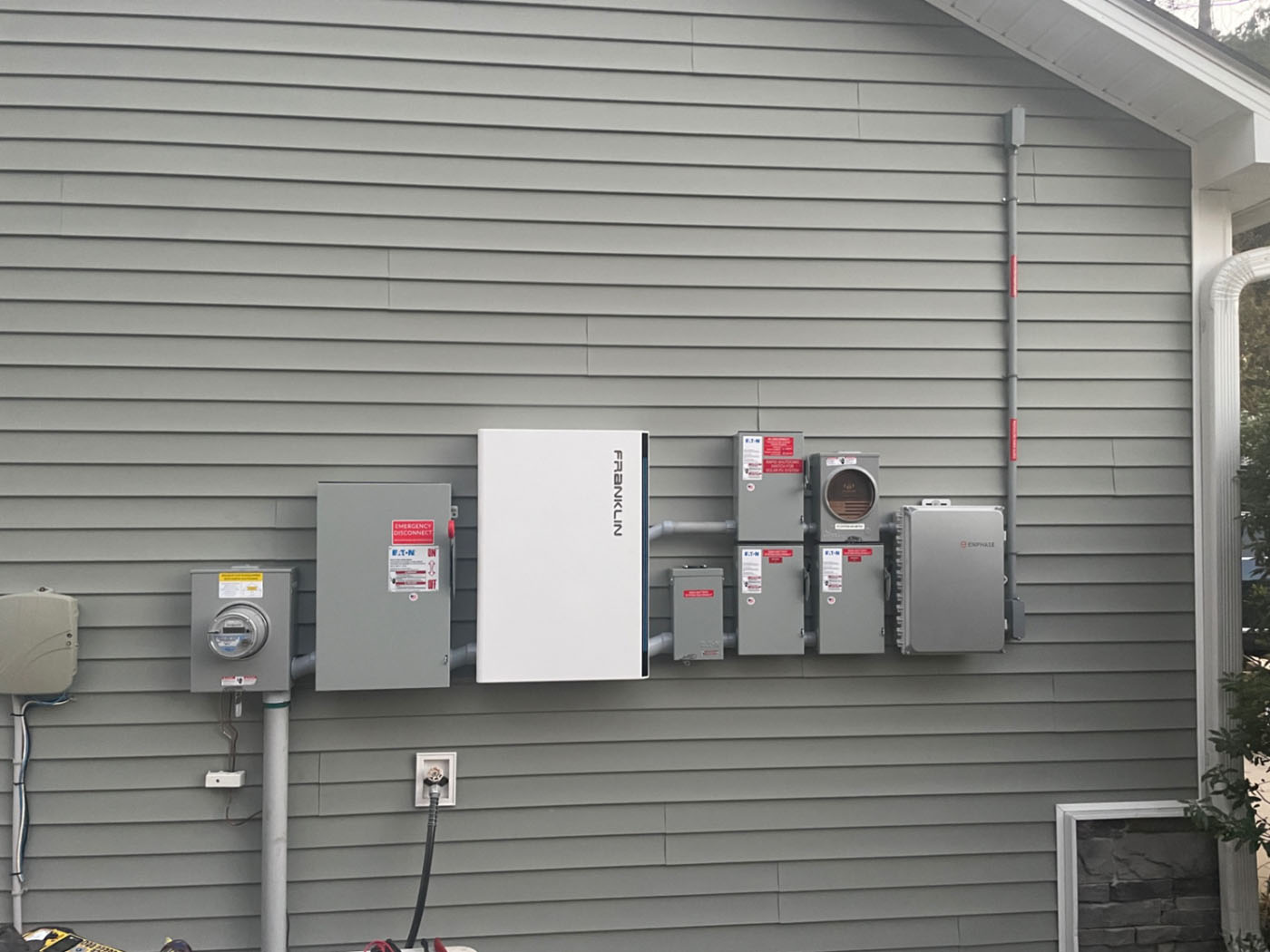
Georgia Power's upcoming Virtual Power Plant (VPP) program rewards homeowners with compatible battery storage for participating in a shared energy network. During periods of high demand, enrolled households or businesses will have a limited amount of stored energy pulled from their batteries to help support the electric grid. In return, participants receive financial incentives based on the model they’ve enrolled in.
Georgia Power has announced plans for the VPP pilot, but there is currently no confirmed launch date. Projections suggest the program could begin in late 2026 or early 2027, but those timelines remain tentative and are subject to change as Georgia Power finalizes details.
If you'd like to learn more about this exciting solar storage opportunity, this guide covers everything we currently know about the program, including how it works, who may be eligible, and the potential benefits of participating.
How Does a Virtual Power Plant Work?
A virtual power plant (VPP) connects hundreds to thousands of energy devices from homes, businesses, and other buildings in a community. Depending on the program, those devices may include solar panels, home batteries, EV chargers, smart thermostats, HVAC equipment, and more.
Unlike a traditional power plant, a VPP does not have a physical location. Instead, utilities or third-party program operators coordinate the connected devices to help balance electricity supply and demand across the grid.
Every virtual power plant works a little differently, but battery programs—like Georgia Power's proposed VPP—generally follow the same basic process:
First, confirm that your home, utility company, and battery are eligible for the program.
Once you're eligible, you can enroll through your utility company, battery manufacturer, installer, or another program administrator. During enrollment, you will learn how the program works, when your battery may be used, and how you’ll be paid for participating.
After you enroll, your battery is connected to the program's software. The provider may test the connection to make sure it can communicate with your battery when needed.
Your battery will work as it always has. It stores electricity from your solar panels or the grid, powering your home whenever you need it.
When electricity demand increases—such as during a heat wave or another period of heavy grid use—the program will ask participating batteries to help.
Depending on the program, your battery may:
- Send stored electricity to the grid
- Delay charging until demand decreases
- Reduce the amount of electricity the property draws from it
Many programs also keep a portion of your battery charged so you still have backup power if you need it. The amount reserved depends on the specific program.
Once the event ends, your battery automatically goes back to its normal operating schedule. If needed, it will recharge and continue powering your home as usual.
After participating, you'll receive the incentives your program offers. Depending on the provider, that could include:*
- A one-time enrollment payment
- Monthly or annual payments
- Payments based on event participation
- Utility bill credits
- Rebates or reduced equipment costs
*Some programs provide only one type of incentive, while others combine several.
Georgia Power's VPP Program Details Eligible Systems, Participation Options, & Incentives
Below is what we currently know about Georgia Power’s VPP program:
Eligible Technologies: Solar + Battery Storage or Standalone Batteries
The program will be available to residential and small commercial customers with qualifying battery energy storage systems (BESS).
Eligible systems include:1
- A solar energy system paired with battery storage.
- A standalone battery system that meets Georgia Power’s requirements. Standalone batteries are only eligible under the Customer-Directed enrollment option.2
The maximum battery size depends on the type of participant:
- Residential: Up to 20 kW
- Small Commercial: Up to 250 kW, but no more than 125% of the property's metered electricity demand. In other words, the battery cannot be significantly larger than what the building typically uses.
Battery Ownership: Customer or Third Party
Battery ownership does not determine eligibility. As long as your battery meets the program's technical requirements, you may qualify whether you:
- Lease it
- Own it outright
- Obtain it through a third-party ownership or financing program
Participation Options: Customer-Directed vs. Company-Directed
Participants can choose between two enrollment models:2
- Standard Incentive: Most participants enrolled in the Customer-Directed model will receive:
- $15 per eligible kW as an enrollment incentive.
- $1.50 per qualifying kWh discharged during VPP events, paid annually.
- Enhanced Incentive: Certain participants may qualify for an increased enrollment incentive of $45 per kW, up from the standard $15 per kW. These participants include:
- Low-to-moderate-income (LMI) residential customers
- Commercial customers in the MUSH sector (municipalities, universities, schools, and hospitals)
This option may appeal to customers who want to maintain control over how their battery is used. Participants can manage their own utility rate strategy and backup power needs while earning ongoing performance revenue.
This option DOES NOT include annual performance payments. Instead, participants receive a much larger upfront incentive.
According to the current pilot proposal:
- Most eligible participants receive $750 per eligible kW
- Eligible LMI residential customers and qualifying MUSH organizations receive an increased incentive of $1,000 per eligible kW
This option may be a good fit for customers who prioritize the upfront economics of their battery project. With the larger, one-time enrollment incentive, customers receive immediate financial value without relying on ongoing performance payments.
How Can You Join?
Georgia Power runs the Virtual Power Plant program, but Solar Energy Partners helps homeowners determine whether participation is right for them. If you’re considering solar, battery storage, or both, our team can guide you through every step of the process, including:
- Designing a solar and battery storage system that meets the program’s technical requirements.
- Installing a compatible battery energy storage system (BESS).
- Explaining Georgia Power’s eligibility requirements and your participation options.
- Assisting with the enrollment process.
Pros & Cons of Joining: Summary Table
| Pros |
Cons |
|
Earn incentives.
Georgia Power will offer an enrollment payment, and the Customer-Directed model also includes annual performance-based incentives. The amount you receive depends on the program model you’ve enrolled in.
|
Less control over your battery.
During VPP events, the program may charge, discharge, or reserve amounts of your battery storage according to the participation agreement. While most programs maintain a backup reserve, you may have less stored energy available than if you weren't enrolled.
|
|
Lower or stabilize electricity costs.
Utilities often charge higher costs during periods of peak electricity demand. Depending on your utility's rate structure and VPP program, participating may help reduce or stabilize your electricity costs.
|
Battery degradation.
Every battery gradually loses capacity over time. Because VPP participation can increase the number of charge and discharge cycles, it may contribute to battery wear.3
|
|
Support a cleaner, more reliable grid.
VPPs help integrate renewable energy and can reduce the need to build additional fossil fuel power plants, transmission lines, and other expensive grid infrastructure.
|
Requires compatible equipment.
Most programs require approved battery models, a reliable internet connection, and compatible software. If your system doesn't meet the requirements, upgrades may be needed before you can enroll, which can be expensive.
|
|
Help improve grid reliability.
By reducing strain during periods of high electricity demand, VPPs can lower the risk of outages and improve overall grid stability.
|
Data privacy concerns.
Participating may require sharing battery performance and energy usage data with your utility or program administrator. Like other connected technologies, VPPs can be vulnerable to cybersecurity risks.
|
Virtual Power Plant FAQs
Have questions about Virtual Power Plants or the specifics of Georgia Power's program? Here, we've answered some of the most common questions.
If you have further inquiries, please reach out to our team at 800-344-1295, visit our contact page, or view additional FAQs by following the link below.
A virtual power plant (VPP) is a network of connected energy devices from homes, businesses, and other buildings. When you enroll compatible devices, your utility or a third-party program operator coordinates the stored energy from your system with thousands of other participating systems. During periods of high electricity demand, that stored energy helps support the electric grid.
In return, participants receive financial incentives that vary by program.
Not always. Georgia Power accepts both solar-plus-battery systems and certain standalone battery systems. However, standalone batteries are currently only eligible under the Customer-Directed enrollment option.
Only battery systems that meet Georgia Power's technical requirements are eligible. Residential customers can enroll battery systems up to 20 kW, while qualifying small commercial customers can enroll systems up to 250 kW, subject to program requirements. Your installer or Georgia Power can confirm whether your battery qualifies.
Your incentives depend on the enrollment option you choose.
- Customer-Directed Model: Participants receive a $15 per eligible kW enrollment incentive and $1.50 per qualifying kWh discharged during VPP events, paid annually.
Eligible low-to-moderate-income (LMI) customers and qualifying municipalities, universities, schools, and hospitals (MUSH) may receive an increased enrollment incentive of $45 per eligible kW.
- Company-Directed Model: Instead of annual performance payments, participants receive a larger upfront incentive. Most participants receive $750 per eligible kW, while eligible LMI customers and qualifying MUSH organizations may receive $1,000 per eligible kW.
Georgia Power has announced the program, but enrollment is not currently open, and there is no launch date. If you're interested in participating, Solar Energy Partners can help you choose a compatible battery system so you're ready when enrollment begins. We're also happy to keep you updated as Georgia Power releases new information about the program.
Contact Us to Learn More About the VPP Program
If you have questions about Georgia Power's Virtual Power Plant program or want to prepare your home for enrollment, Solar Energy Partners, GA is here to help. Whether you need to inspect your current system, upgrade your battery, install a new solar-plus-battery system, or simply determine if your home is a good fit for the program, our team can guide you through the process.
Contact us today at 800-344-1295 to learn more or schedule a consultation!